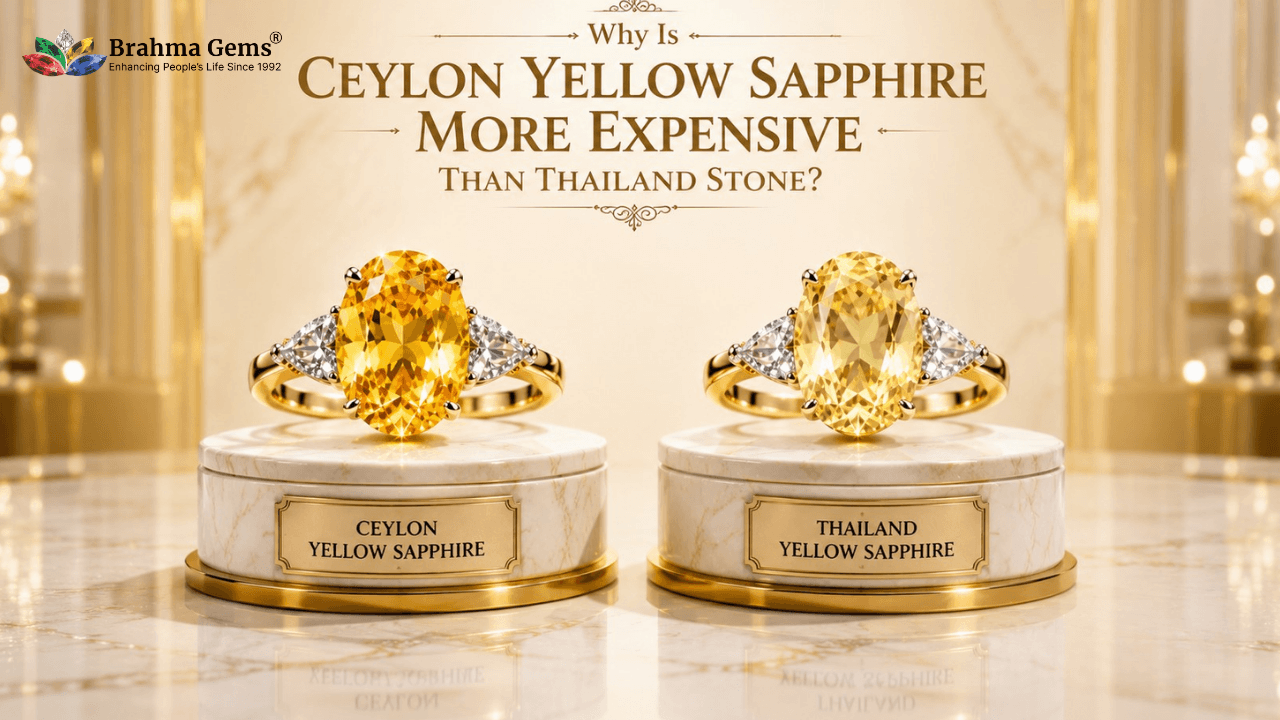
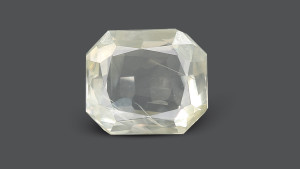
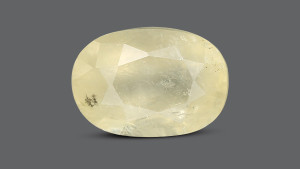
Ceylon Yellow Sapphires are more expensive because of their superior natural color, clarity, and rarity. Unlike Thailand stones, which are often heavily treated with Beryllium diffusion or high-heat, Ceylon stones retain their geological integrity. This translates to higher astrological potency and long-term resale value, making them the preferred choice for those seeking a natural yellow Sapphire for life-changing results.
The Origin Story: Why "Ratnapura" Beats "Bangkok"
When you enter a store to buy yellow sapphire stone, you are essentially looking at two different worlds. Sri Lanka (historically Ceylon) is the legendary home of the world’s finest natural ceylon yellow sapphire. The mines of Ratnapura produce stones that are naturally vibrant, meaning they come out of the earth with that "canary yellow" glow already intact.
On the other hand, Thailand stones (often sourced from Chanthaburi or Kanchanaburi) are naturally pale or brownish. To make them sellable, they undergo intense laboratory treatments. When you see an "original yellow sapphire" with a price tag that seems too low, you are likely looking at a stone that has been "cooked" at extreme temperatures to force a color change.

Thinking of Buying Yellow Sapphire? watch This Before You Regret It l Brahma Gems
The "Treatment" Trap: Why Thailand Stones Cost Less
The primary reason for the price gap is Treatment.
- Natural Colour: Most natural ceylon yellow sapphire is either unheated or only slightly heated. Its color is a gift of nature.
- Beryllium Diffusion: Many Thailand stones undergo "diffusion," where chemicals are forced into the stone at high heat to change the color. While this makes the stone look beautiful, it is no longer an original yellow sapphire in the eyes of Vedic astrology.
Astrologically, a "diffused" stone is considered "dead." It has no planetary energy. This is why a certified yellow sapphire from Sri Lanka commands a premium,it is a "living" mineral with its energy field intact.
How to Select and Buy Yellow Sapphire || Brahma Gems
Astrological Potency: Why Jupiter Loves Ceylon
In Indian culture, the pukhraj stone is worn to appease Jupiter. Jupiter is the planet of purity (Sattva). If you wear a stone that has been chemically altered or artificially "enhanced" in a lab in Bangkok, you aren't providing Jupiter with a clean channel.
A natural yellow Sapphire from Ceylon has a specific "vibration" that treated stones lack. We’ve seen hundreds of cases where clients wore a cheap Thailand pukhraj stone for years with no results, only to see a massive shift in their professional life within months of switching to an original ceylon yellow sapphire ring. The clarity and internal "fire" of a Ceylon stone act as a magnifying glass for your intentions.
Life Changing Benefits of Yellow Sapphire
The Investment Angle: Resale Value and Rarity
Gemstones are not just for luck; they are "Portable Wealth."
If you buy pukhraj stone from a Thai origin, its resale value is negligible because the market is flooded with them. However, a x is a finite resource. The prices for unheated Sri Lankan sapphires have risen by nearly 20–30% annually over the last decade.
When you purchase an original yellow sapphire from Brahma Gems, you are buying an asset. A certified yellow sapphire with a Sri Lankan origin is globally recognized by labs like GRS, IGI, and GIA, making it easy to liquidate or upgrade in the future.
The Brahma Gems Consultation: A "Fake" Reality Check
A customer once visited our Delhi store with a massive 7-carat "Pukhraj" he bought during a trip to Thailand. It was a stunning, deep yellow,almost too perfect. When our gemologists tested it, it was revealed to be "Glass-Filled Sapphire." It was basically 60% glass and 40% stone. He had paid ₹50,000 for something worth ₹500. He left that day with a 4-carat natural ceylon yellow sapphire, smaller in size but infinite in quality.
This is why we emphasize the importance of the source. An original ceylon yellow sapphire ring isn't just about the metal; it’s about the soul of the stone.
How to Buy Yellow Sapphire Stone Like an Expert
- Check the "Inclusions": A natural yellow Sapphire will have tiny liquid inclusions or "fingerprints." If a stone is "glass-clean," it’s either synthetic or heavily treated.
- Ask for the Origin: Ensure the certificate explicitly states "Sri Lanka" or "Ceylon."
- The "Treatment" Column: Look for "No indications of heating" or "H" (Simple heat). Avoid "LI" (Lead-glass filled) or "D" (Diffused) at all costs.
(FAQs)
Q1: Is a heated Ceylon Pukhraj still effective?
A: Yes, mild heating is a globally accepted practice. However, an "Unheated" natural ceylon yellow sapphire is always the most potent and expensive option.
Q2: Why is the pukhraj stone price so high for smaller Ceylon stones?
A: Because rarity dictates price. A 2-carat original yellow sapphire from Ceylon is rarer than a 10-carat treated stone from Thailand.
Q3: Can I identify a Thailand stone just by looking at it?
A: Not easily. Expert treatments can fool the naked eye. This is why you must only buy a certified yellow sapphire from a trusted source like Brahma Gems.
Q4: Which metal is best for an original ceylon yellow sapphire ring?
A: Gold is the preferred metal for pukhraj stone as it is the metal of Jupiter. For specific results, 18K or 22K yellow gold is recommended.
Q5: Does the color of a yellow sapphire stone fade over time?
A: A natural yellow Sapphire will never fade. However, "Diffused" stones or those with cheap dyes can lose their luster if exposed to heavy sunlight or chemicals.
 +919953660004
 +18886144437
 +44
8081965700
+44
8081965700